

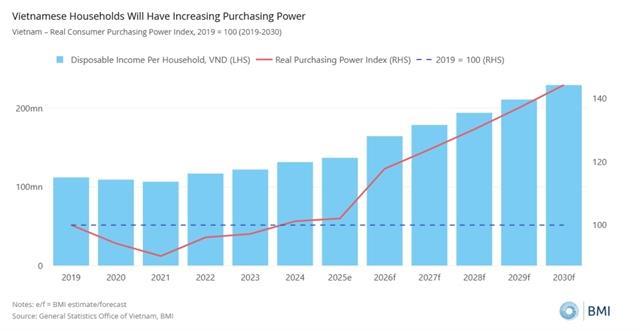

Vietnam’s economy remains resilient, but deeper reliance on key markets raises concerns, according to a senior country risk analyst at BMI, a unit of Fitch Solutions.
Việt Nam’s revised national master plan aims to new growth hubs, strengthen regional connectivity and accelerate technology-driven development as the country targets annual economic growth of at least 10 per cent in the coming years.
Việt Nam faces urgent pressure to revamp its FDI strategy as AI reshapes global investment, shifting focus to technology, talent and innovation ecosystems over cheap labour
As the city has set a GRDP growth target of over 10 per cent for 2026, growth in the first half must reach at least 10.3 per cent, with the second quarter alone tartgeted at 11.59–12.49 per cent (average 12.04...
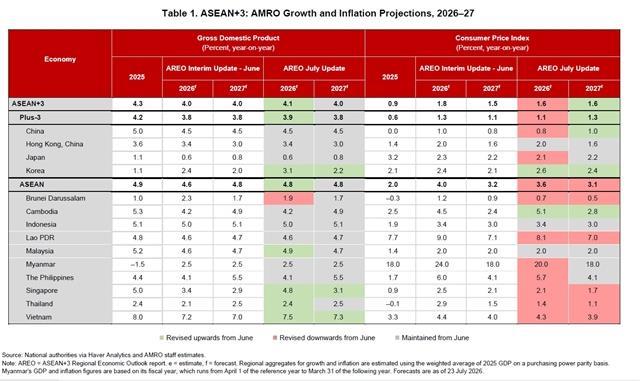
AMRO says Việt Nam’s economy remains resilient with growth projected at 7.2 per cent, but warns rising energy prices and rapid credit expansion are increasing risks to macro-financial stability.
Once operational, the zone is expected to contribute 8-12 per cent of the province’s gross regional domestic product and between 150,000 and 250,000 high-quality jobs.
Việt Nam needs to foster a new generation of private enterprises with stronger technological capabilities to lead key industries and shift from supporting growth to driving the country’s modernisation.
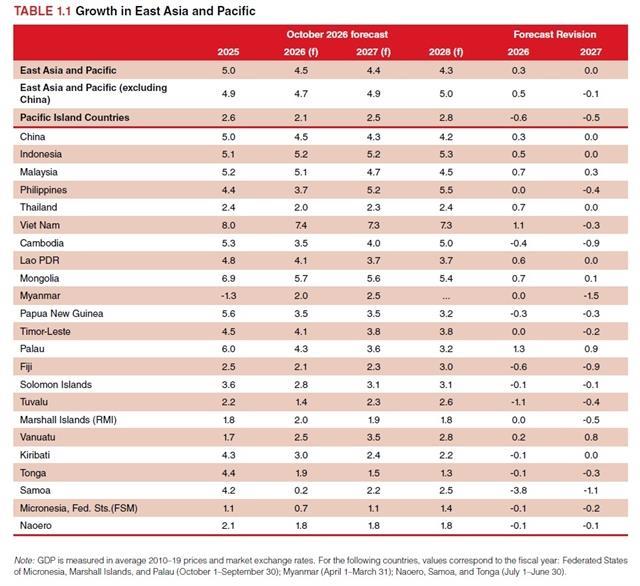
Gross domestic product (GDP) growth is projected to moderate to 7.2 per cent in 2026 and 7.0 per cent in 2027 under the ADB''s baseline scenario, after expanding by 8.0 per cent in 2025.
As savings rate of Vietnamese people is very high at up to 37 per cent of GDP, experts said it is a potential available capital resource that should be exploited to promote economic growth.
Looking back, from a poor, war-torn and underdeveloped country, Việt Nam has travelled a long and challenging path yet proud with far-reaching achievements that have strengthened the country’s economic capacity, social resilience and international standing.
The new policies must focus on optimising State resources, improving governance, promoting digitalisation and green development, and balancing State and private sector resources, while reducing unnecessary administrative intervention.